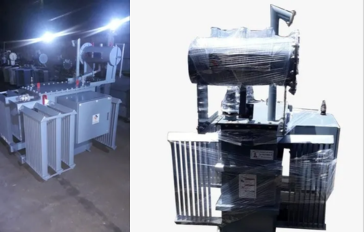
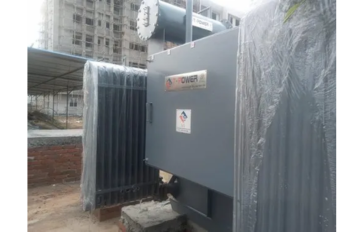
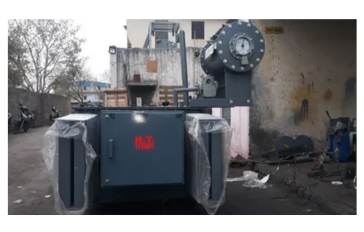
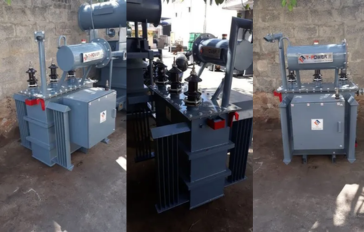
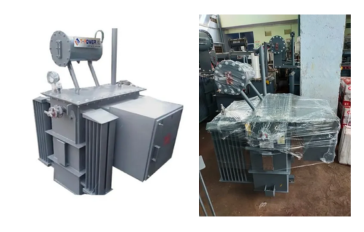
Oil Cooled Transformer
An oil-cooled transformer is a type of power transformer that uses insulating oil as a cooling and insulating medium. It is widely used in electrical power distribution and transmission systems, especially in medium to high-voltage applications, due to its high efficiency, durability, and better thermal performance. The oil not only cools the internal components of the transformer but also provides excellent dielectric insulation between parts at different voltages. The transformer oil is typically mineral-based, but in recent years, biodegradable and synthetic ester-based oils have gained popularity due to their environmentally friendly and fire-resistant properties.A
Oil-cooled transformers operate by dissipating the heat generated in the core and windings through a heat exchange mechanism. As the transformer runs, the internal temperature rises, causing the oil to heat up. The hot oil rises to the top and circulates naturally or is pumped through radiators or cooling fins, where it loses heat to the ambient air. This process, called natural oil cooling (ONAN) or forced oil and air cooling (OFAF), ensures that the transformer remains within safe operating temperatures even under high loads. For larger power transformers, forced oil and air or oil and water systems may be employed to increase cooling capacity.
The modern oil-cooled transformers are designed with improved temperature monitoring, pressure relief systems, Buchholz relays, and advanced sealing technology to prevent oil leakage and moisture ingress. These safety features enhance the reliability and longevity of the transformer. Smart sensors and IoT integration are also being incorporated into oil-cooled transformers for real-time condition monitoring, predictive maintenance, and remote diagnostics, aligning with the trends of smart grid infrastructure.
One of the key advantages of oil-cooled transformers over dry-type alternatives is their ability to handle higher power loads and offer longer service life due to better thermal management. However, their use requires caution in indoor or fire-sensitive environments due to the flammability of traditional mineral oil. In response, fire-resistant fluids such as FR3 natural ester oil and synthetic hydrocarbons are being adopted more widely.
In terms of maintenance, oil-cooled transformers require periodic oil testing for moisture content, acidity, dielectric strength, and dissolved gas analysis (DGA), which can detect early signs of insulation degradation or internal faults. These routine checks are crucial for ensuring uninterrupted operation and avoiding catastrophic failures.
As the demand for renewable energy integration and reliable electricity networks grows, the role of oil-cooled transformers is becoming increasingly significant. Their ability to support large-scale solar and wind farms, industrial complexes, and smart cities makes them indispensable in modern power systems. Manufacturers are also focusing on eco-designs, improved cooling efficiency, and compact sizes to cater to urban installation needs.
In summary, oil-cooled transformers are a cornerstone of electrical infrastructure, offering high performance, adaptability, and robust operation. With technological advancements and environmentally conscious designs, they continue to evolve to meet the energy challenges of today and tomorrow.