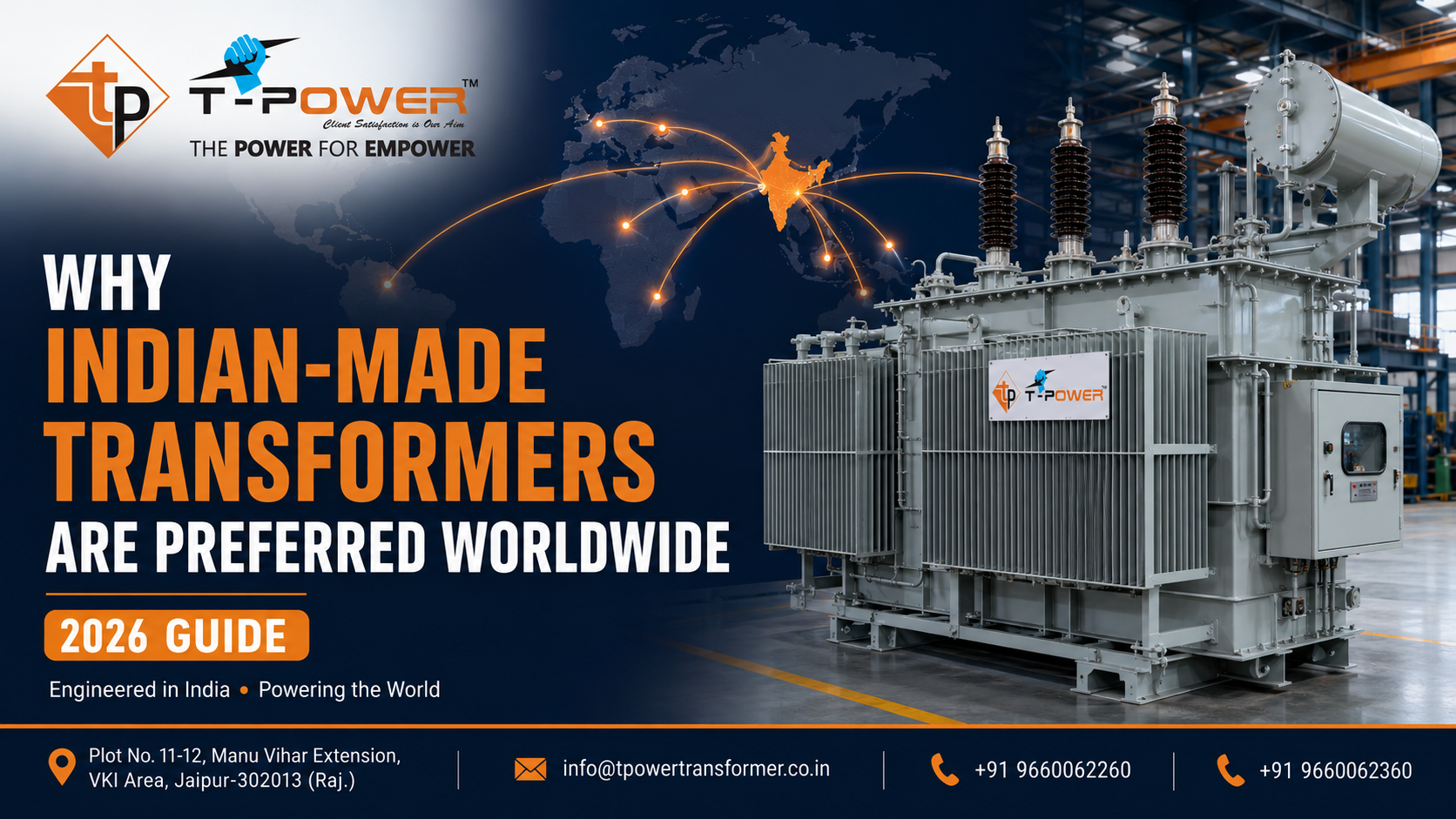
Why Indian-Made Transformers Are Becoming the Preferred Choice Worldwide
The global power sector is entering a demanding expansion cycle. Utilities are reinforcing ageing networks, industries are electrifying processes, renewable-energy plants are being connected at scale, data centres require dependable power and developing economies are building new distribution infrastructure. At the same time, buyers face long equipment lead times, supply-chain uncertainty and pressure to control the full lifecycle cost of every asset. These conditions are encouraging procurement teams to evaluate a wider and more diverse manufacturing base.
India has become increasingly relevant in that search. The country already operates one of the world’s largest and most varied electrical systems, creating domestic demand for transformers that must work in high ambient temperatures, dusty industrial zones, humid coastal regions, dense cities and remote renewable-energy sites. This practical experience has helped Indian manufacturers develop skills across distribution, power, inverter duty, furnace, dry type, isolation and other application-specific transformers.
However, the explanation of why Indian-made transformers are becoming the preferred choice worldwide cannot be reduced to low purchase price. Serious global buyers look for application engineering, standards-based design, repeatable manufacturing, verified tests, transparent documentation, delivery reliability and support after installation. Indian suppliers that perform well across those areas offer a strong combination of technical flexibility, commercial value and communication speed.
This 2026 guide from T Power Transformer examines the opportunity in practical terms. It explains the advantages, the limitations buyers should recognise, the documents that reduce import risk and the step-by-step itinerary for sourcing an Indian-made transformer for an international project.
What Does “Indian-Made Transformer” Really Mean?
An Indian-made transformer is designed, manufactured, assembled or substantially produced in India, depending on the supplier’s actual scope and the origin rules applicable to the transaction. The phrase should not be treated as a technical specification by itself. Two Indian factories may use different design systems, core materials, conductor sources, insulation processes, tank fabrication methods, testing capabilities and quality controls.
A buyer should therefore move beyond the country-of-origin label and evaluate the exact manufacturer. Important questions include: Who owns the electrical design? Which processes are performed in-house? How are materials approved? Which routine tests are available? Can the factory demonstrate traceability? Who will prepare drawings and respond to technical comments? How will warranty support work in the destination country?
The best Indian suppliers are not simply exporting a standard domestic product. They are converting the purchaser’s specification into an application-specific design, confirming destination standards, adapting terminals and accessories, preparing export documentation, protecting the unit for transport and supporting the buyer through installation. That export-readiness is a major part of the global value proposition.
The 2026 Global Context: Why Buyers Are Expanding Their Supplier Base
Transformer demand is being shaped by several simultaneous changes. Renewable generation requires inverter duty and grid-interface transformers. Electric mobility and industrial electrification increase distribution demand. Data centres and semiconductor plants place high value on continuity and power quality. Utilities need replacement units for ageing fleets. Grid resilience programmes create demand for additional stock and alternative suppliers.
Transformer procurement is also exposed to core steel, copper, aluminium, insulation, bushings and logistics constraints. Depending too heavily on one geography or one factory can increase project risk. International buyers are consequently qualifying second sources, regional alternatives and manufacturers that can customise without excessive engineering delay.
India’s broader electrical-equipment ecosystem is expanding in response. In 2026, industry analysis highlighted the potential for India’s electrical-equipment production and exports to grow substantially through 2035, supported by power infrastructure, renewables, batteries, industrial modernisation and localisation. Such projections are not a guarantee for an individual supplier, but they show why global procurement teams are paying closer attention to Indian manufacturing capacity.
Why Indian-Made Transformers Are Becoming the Preferred Choice Worldwide
1. Strong Application Engineering Across Diverse Power Systems
India’s electrical network covers urban distribution, rural feeders, industrial plants, mines, railways, solar parks, wind farms, commercial buildings and large transmission projects. Manufacturers serving these sectors encounter a broad range of ratings, voltages, vector groups, impedances, tapping arrangements, cooling classes and environmental conditions.
This diversity supports practical engineering capability. An export customer may need a transformer for solar inverter output, cyclic furnace load, high motor-starting current, harmonic-rich industrial equipment or an unusual primary voltage. A capable Indian manufacturer can review the load profile instead of treating the enquiry as a standard kVA selection.
Custom engineering can include winding material, flux density, impedance, tapping, electrostatic shielding, terminal orientation, cable boxes, enclosure protection, corrosion system, monitoring and accessories. The value is highest when the supplier asks detailed questions before quotation and documents every agreed deviation.
2. Competitive Total Value, Not Merely a Low Initial Price
India can offer competitive engineering and manufacturing economics, but global buyers should compare total landed and lifecycle cost. Purchase price is only one component. Freight, marine insurance, import duty, inspection, civil work, losses, maintenance, spares, installation and downtime also matter.
A well-selected Indian-made transformer can provide value by combining an appropriate loss design, customised accessories and responsive engineering at a commercially attractive price. A transformer that requires fewer site modifications or reduces long-term energy loss may be more economical than a cheaper catalogue unit.
The bid comparison should capitalise guaranteed no-load and load losses using the same assumptions for every supplier. It should also normalise exclusions. One quotation may include a marshalling box, winding indicators, cable boxes and export packing, while another lists them separately. Only a common scope reveals genuine value.
3. Capability to Manufacture Custom and Special-Purpose Units
Many global projects do not need a mass-produced standard transformer. They need a unit matched to an existing substation, replacement footprint, inverter system, industrial process or specific grid interface. Indian manufacturers often compete effectively in this high-mix, engineered-to-order segment.
Possible requirements include dual secondary windings, non-standard voltage ratios, special impedance, multiple tap positions, copper or aluminium windings, inverter duty, isolation duty, indoor dry type construction, compact dimensions or destination-specific bushing arrangements. A flexible factory can adapt mechanical and electrical design while preserving testability and safe clearances.
Customisation should still be controlled. Every special requirement must appear in the approved data sheet and drawings. The supplier should explain how it affects losses, temperature rise, dimensions, weight, short-circuit forces and delivery. Unrecorded verbal changes create export risk.
4. Growing Experience With Renewable-Energy Transformers
India’s rapid renewable-energy development has created demand for inverter duty transformers, pooling-station transformers, wind application units and auxiliary transformers. This gives manufacturers experience with variable loading, daily thermal cycling, high outdoor temperature, inverter harmonics and plant SCADA interfaces.
For international solar projects, a transformer may need multiple inverter inputs, electrostatic shielding, carefully selected impedance, harmonic thermal review and low losses across a variable generation profile. Wind projects can introduce different cyclic and grid-support requirements. Battery systems may add bidirectional flow and a duty profile that differs from solar alone.
A buyer should confirm that the proposed manufacturer has reviewed the actual inverter or converter data. “Renewable ready” is not a sufficient specification. The quotation should state the design inputs, number of inverter connections, harmonic assumptions, earthing arrangement and operating range.
5. Standards-Based Design and Testing Frameworks
Indian transformer engineering commonly works with the IS 2026 series and the IEC 60076 series, subject to transformer type and project requirements. BIS records show, for example, that parts of IS 2026 address insulation levels, dielectric tests, external clearances and short-circuit withstand. The IEC 60076 family provides widely recognised international requirements for power transformers.
Standards alignment makes international evaluation easier, but the buyer must identify exact standards, parts, editions and project clauses. Writing only “IEC standard” can leave important matters open. The specification should define rating, service conditions, temperature rise, insulation level, losses, sound, dielectric tests, short-circuit requirements and acceptance criteria.
The manufacturer should issue a test schedule before inspection. Routine tests should be performed as applicable to the product and governing specification. Type or special tests may be required by contract, performed on the ordered unit or supported by valid evidence from a representative design, depending on the agreement.
6. Responsive Technical Communication
Export projects require more communication than domestic catalogue purchases. The supplier may need to answer consultant comments, revise drawings, clarify cable interfaces, issue material lists and coordinate inspection. Delayed communication can hold up the entire substation.
Many Indian engineering teams operate comfortably in English and work across international time zones. More importantly, the right manufacturer can provide direct access to people who understand electrical and mechanical design rather than routing every question through a sales chain.
Responsiveness should be tested during prequalification. Ask a technical question, request a marked-up data sheet and observe whether the answer is precise. Fast replies have little value if they avoid the engineering issue; strong communication is both timely and technically complete.
7. Flexible Production for Small, Medium and Project Quantities
Large global factories may be optimised for standardised volume or very high ratings. Many Indian manufacturers can be flexible with one-off replacements, repeated renewable blocks, small utility batches and medium-sized industrial projects. This flexibility is useful when a purchaser needs several ratings under one package.
A flexible factory can standardise common parts while preserving project-specific interfaces. For example, several transformer ratings may share monitoring devices, terminal hardware or control philosophy. Standardisation simplifies spares without forcing every unit into the same unsuitable design.
Capacity must nevertheless be verified. Buyers should ask for an honest production schedule, current loading, long-lead component plan and inspection milestones. A promised short lead time is not credible unless material availability and engineering approval dates support it.
8. Robust Designs for Demanding Climates
Indian equipment commonly operates in high heat, monsoon humidity, dust, industrial pollution and coastal salinity. This experience can benefit projects in Africa, the Middle East, Southeast Asia, Latin America and other demanding regions. Appropriate cooling, paint, sealing, enclosure and material selection can be incorporated when the destination conditions are known.
No manufacturer should assume that experience in India automatically covers every foreign site. High altitude reduces cooling and affects clearances. Extreme cold changes material and fluid behaviour. Desert sand, tropical rainfall, seismic conditions and cyclonic wind need specific review. The buyer must provide real site data.
The strongest design is based on maximum and minimum ambient temperature, altitude, humidity, pollution level, corrosion category, indoor or outdoor installation, solar exposure and seismic or wind requirements. These parameters belong in the guaranteed technical particulars.
9. Expanding Supply-Chain and Manufacturing Ecosystem
Transformer production depends on electrical steel, conductors, insulation, fabricated tanks, radiators, bushings, tap changers, protection devices, instruments and controls. India has a broad network of component suppliers and fabrication specialists, supporting both standard and customised production.
This ecosystem can shorten communication and allow alternative component strategies, but localisation should not be assumed. Some specialised parts may be imported. Buyers should ask which critical components are domestic, which are imported, whether approved alternatives exist and how substitutions are controlled.
Traceability is more important than origin alone. Material certificates, approved vendor lists, incoming inspection and serial-level records help demonstrate that the manufactured unit matches the approved design.
10. Increasing Digital Monitoring and Smart-Transformer Options
Global owners increasingly want data, not only alarms. Depending on asset criticality, an Indian supplier can integrate winding and oil temperature monitoring, load data, cooling-stage status, oil-level contacts, pressure devices and communication gateways. Larger power transformers may justify advanced online condition monitoring.
Smart features create value only when they connect to the owner’s system. The specification should define communication protocol, voltage supply, data points, alarm thresholds, time synchronisation, cybersecurity responsibility and spare-sensor strategy.
A practical monitoring package supports predictive maintenance and remote assets. It can reveal abnormal temperature at a familiar load, cooling failure, phase imbalance or repeated alarm conditions before they produce an outage.
11. Export Packing and Multimodal Logistics Capability
A transformer can pass every factory test and still be damaged by poor transport. Export manufacturers must understand moisture protection, corrosion prevention, shock control, lifting, centre of gravity, accessory packing, container or flat-rack constraints and preservation during storage.
The logistics plan should identify whether the unit ships fully assembled, partially dismantled or with fluid handled separately. Bushings, conservator, radiators and fragile instruments may need dedicated crates. Every package should have a packing list and durable identification linked to drawings.
For large units, route survey, port handling, lifting points and site crane requirements should be agreed early. A low ex-works price can be erased by an impractical shipping arrangement.
12. A Stronger Culture of Global Quality Competition
Indian manufacturers increasingly compete against suppliers from multiple countries rather than relying only on domestic demand. Global tenders force clearer documentation, guaranteed performance, inspection discipline and commercially transparent scope.
Industry growth targets also emphasise resilient supply chains, quality upgrades and competitive pricing. This creates pressure to improve design software, winding processes, drying, fabrication, test facilities and project management. Buyers benefit when competition is based on evidence rather than claims.
Still, quality varies. The worldwide preference is developing for qualified Indian manufacturers, not automatically for every product made in India. Factory evaluation remains essential.
Indian-Made vs Generic International Sourcing: A Practical Comparison
| Evaluation Area | Potential Indian-Manufacturer Advantage | Buyer Verification Required |
|---|---|---|
| Custom engineering | Flexible ratings, voltages, winding arrangements and accessories | Approved data sheet, calculations and drawings |
| Commercial value | Competitive engineering and manufacturing cost | Landed cost, losses, exclusions and lifecycle evaluation |
| Standards | Experience with IS and IEC-based specifications | Exact standard edition, destination rules and test scope |
| Renewable duty | Growing solar, wind and inverter-transformer experience | Actual converter data and project references |
| Communication | Direct English-language engineering coordination | Response quality, document control and named project team |
| Production flexibility | Support for customised or mixed-rating packages | Factory load, component plan and realistic schedule |
| Climate capability | Experience with heat, dust, humidity and outdoor service | Destination-specific design parameters |
| Export logistics | Increasing capability for international packing and shipping | Method statement, packing drawing and transport responsibility |
| After-sales support | Remote technical response and partner-based service options | Written warranty process, spares and local response plan |
Transformer Types International Buyers Can Source From India
Distribution Transformers
Distribution transformers support utility networks, residential developments, commercial campuses and industrial distribution. Buyers can specify liquid immersed or dry type construction, loss limits, tap range, vector group, protection, metering interfaces and enclosure details according to local practice.
Power Transformers
Power transformers serve substations, generation plants and large industrial networks. These projects demand detailed system data, insulation coordination, short-circuit review, cooling design, accessories and inspection planning. Transport limits often influence final dimensions and assembly.
Solar Inverter Duty Transformers
Inverter duty transformers connect solar inverter outputs to medium-voltage collection networks. The design should consider harmonic spectrum, multiple LV inputs, daily thermal cycling, high ambient temperature, electrostatic shielding where required and annual loss performance.
Wind and Renewable-Energy Transformers
Wind projects can require pad-mounted, nacelle-related or substation transformers depending on architecture. Hybrid and storage projects may add bidirectional flow. Every converter-driven application needs actual operating data rather than a generic renewable label.
Dry Type Transformers
Dry type transformers are used in buildings, data centres, hospitals, tunnels, factories and fire-sensitive installations. Enclosure ventilation, contamination, ambient temperature, sound level and winding technology must suit the site.
Industrial and Special-Purpose Transformers
Manufacturers may support furnace, rectifier, isolation, earthing and other special duties. These require detailed load cycles, harmonics, overload pattern, secondary arrangement and protection philosophy. Project references should match the application, not merely the rating.
2026 International Buyer Itinerary: How to Source a Transformer From India
This procurement itinerary converts interest in Indian manufacturing into a controlled sourcing process. It can be adapted for utilities, EPC companies, renewable developers, distributors and industrial asset owners.
Step 1: Define the Electrical Duty
Prepare rating, primary and secondary voltage, frequency, phases, vector group, impedance, tapping, earthing and cooling requirements. Include load profile, harmonics, overload, motor starting or converter duty. Share a single-line diagram where possible.
Step 2: Define Destination Requirements
State the installation country, applicable standards, grid frequency, utility rules, language, marking, import certification and documentation needs. Provide maximum and minimum temperature, altitude, humidity, pollution, seismic and corrosion data.
Step 3: Prequalify the Manufacturer
Review company experience, application references, design team, manufacturing scope, quality system, testing capability and financial or delivery capacity appropriate to the order. Ask who will own engineering, inspection and after-sales support.
Step 4: Issue a Common Enquiry Package
Send every bidder the same specification, data sheet, drawings and commercial format. Require a clause-by-clause response and deviation list. This prevents hidden assumptions from distorting the comparison.
Step 5: Compare Technical Offers Before Price
Confirm rating, loss values, temperature rise, impedance, insulation, conductor, accessories, tests, dimensions and terminal arrangement. Resolve deviations before opening or finalising the commercial evaluation.
Step 6: Calculate Landed and Lifecycle Cost
Add packing, inland freight, ocean or air freight, insurance, duty, taxes, inspection, commissioning, spares and expected energy losses. Use identical economic assumptions for all bids.
Step 7: Audit the Factory or Conduct a Remote Assessment
Review material control, core assembly, winding, insulation, drying, tank fabrication, final assembly, test laboratory, calibration and document traceability. If travel is not practical, request a structured live audit with evidence rather than a promotional video.
Step 8: Freeze the Contract and Document Register
Define technical scope, delivery basis, payment milestones, warranty, delay terms, inspection notice, test records, packing, shipping documents and approval schedule. Create a document register with responsible dates.
Step 9: Approve Design Inputs and Drawings
Approve guaranteed technical particulars, general arrangement, foundation load, terminals, cable boxes, control schematic, accessory list and nameplate. Any change after approval should use formal revision control.
Step 10: Monitor Critical Materials and Production
Agree on hold points for major materials, winding completion, active-part assembly, tank testing and final inspection where justified. Request progress evidence linked to the manufacturing plan.
Step 11: Witness or Review Factory Acceptance Tests
Confirm test instruments, calibration, procedure and acceptance limits. Witness in person, appoint a third-party inspector or use secure remote witnessing according to project risk. Resolve failures through a documented corrective process.
Step 12: Approve Export Packing and Shipment
Review lifting, dimensions, weights, centre of gravity, dismantled accessories, moisture protection, shock indicators and storage instructions. Check commercial invoice, packing list, origin documents and transport responsibility.
Step 13: Inspect on Arrival
Examine packaging before unloading, record shock indicators, photograph damage and verify all cases. Follow the manufacturer’s storage and assembly instructions. Notify transport-related issues within the contractual period.
Step 14: Install, Test and Commission
Use qualified personnel to assemble accessories, check fluid and insulation condition, torque connections, confirm earthing, test protection and verify ratio, resistance and other site checks as required. Preserve baseline records for maintenance.
Step 15: Establish Warranty and Lifecycle Support
Maintain a serial-number file containing drawings, test reports, spares, settings and contact details. Define escalation, remote diagnosis and local service arrangements before a fault occurs.
Documents Every Global Buyer Should Request
- Clause-by-clause specification compliance statement
- Guaranteed technical particulars and signed deviation schedule
- Approved general arrangement and foundation details
- Electrical schematics, terminal plan and cable-box drawings
- Bill of major materials or approved component schedule as agreed
- Quality assurance plan and inspection/test plan
- Routine test reports and required type or special test evidence
- Instrument calibration records relevant to acceptance tests
- Nameplate drawing and final serial number
- Installation, operation and maintenance manual
- Export packing list and preservation instructions
- Shipping dimensions, weights, lifting and centre-of-gravity drawing
- Recommended commissioning tests and acceptance limits
- Spare-parts list and consumables recommendation
- Written warranty process and service contact matrix
Common Risks and How Buyers Can Control Them
Risk: Selecting Only on the Lowest Price
Control it by comparing common scope, guaranteed losses, landed cost and lifecycle value. Confirm whether accessories, testing and packing are included.
Risk: Vague Standards Language
Control it by listing the exact standard, part, edition and project-specific clauses. Define which requirement governs if two documents conflict.
Risk: Unverified Factory Capability
Control it through audit, relevant references, process evidence and a review of the test laboratory. Do not evaluate capability only from a website.
Risk: Imported Long-Lead Components
Control it by identifying critical component origin, approved alternatives and delivery dates before order. Require approval before substitutions.
Risk: Shipping Damage
Control it with an approved transport plan, suitable export packing, shock indicators, correct lifting and arrival inspection.
Risk: Weak Local Support
Control it through remote-diagnostic procedures, recommended spares, local partner arrangements and clearly defined warranty response.
Risk: Communication and Revision Errors
Control it with one document register, revision numbers, named approvers and formal closure of every technical comment.
Questions to Ask an Indian Transformer Manufacturer
- Have you designed transformers for this exact application and destination standard?
- Which design and manufacturing processes are performed in-house?
- Which critical components are imported, and what are their lead times?
- What no-load and load losses are guaranteed?
- How are temperature rise, harmonics and short-circuit forces evaluated?
- Which routine, type and special tests are available?
- Can the buyer or a third party witness factory acceptance tests?
- How is material and document traceability maintained?
- What export-packing and transport experience does the factory have?
- How will technical support work after the transformer reaches our country?
- Which spare parts should be purchased with the unit?
- What is the realistic drawing approval and production schedule?
Why Consider T Power Transformer?
T Power Transformer provides application-focused transformer solutions for industrial, infrastructure and renewable-energy requirements. The engineering process can review rating, voltage, impedance, winding arrangement, cooling, tapping, losses, installation conditions, terminals, accessories and monitoring before a design is finalised.
For international projects, a clear enquiry package is the starting point. Buyers can share the single-line diagram, data sheet, load profile, destination standards, site conditions and documentation requirements. This allows the technical team to identify deviations early and prepare a more complete proposal.
- Custom distribution, power and inverter duty transformer solutions
- Application-based electrical and mechanical design coordination
- Options for copper or aluminium winding requirements
- Loss, impedance, tapping and cooling discussions based on project duty
- Protection, indication and monitoring interfaces
- Technical drawings, testing documentation and project coordination
- Export enquiry support for industrial and renewable-energy projects
Contact T Power Transformer at +91 9660062260 or +91 9660062360, email info@tpowertransformer.co.in, or visit tpowertransformer.co.in.
Frequently Asked Questions
Why are Indian-made transformers becoming popular worldwide?
Qualified Indian manufacturers can combine custom engineering, competitive total value, renewable-energy experience, standards-based testing and responsive technical communication. Buyers are also diversifying supply chains. The advantages must be confirmed for the individual factory and product.
Are Indian transformers manufactured according to IEC standards?
Many Indian manufacturers design products to IEC 60076 or related IS 2026 requirements when specified. The purchaser must state the exact standard, part, edition and destination requirements and verify compliance through approved documents and tests.
Are Indian-made transformers cheaper?
They can be commercially competitive, but price varies with rating, materials, losses, accessories, testing and delivery. Buyers should compare total landed and lifecycle cost rather than assuming country of origin determines price.
Can Indian manufacturers build custom transformers?
Many factories specialise in engineered-to-order units, including non-standard voltages, tapping, impedance, multiple windings and renewable duty. Custom capability should be verified with relevant references, design review and factory assessment.
What transformer types can be exported from India?
Depending on the manufacturer, offerings may include distribution, power, dry type, inverter duty, isolation, furnace and other special-purpose transformers. Capability, rating range and test facilities differ between factories.
How can a buyer verify transformer quality before shipment?
Use a factory audit, approved quality plan, material traceability, hold points, calibrated test equipment and witnessed factory acceptance tests. Review all reports and close deviations before dispatch release.
What information is required for an export quotation?
Provide rating, voltages, frequency, phases, vector group, impedance, tapping, cooling, losses, site conditions, terminal details, protection, accessories, standards, tests, packing, destination and required delivery basis.
How should after-sales service be arranged internationally?
The contract should define remote diagnosis, response time, spare parts, local partner support, travel responsibility, warranty claims and documentation. Establish the support process before shipment.
How long does international transformer procurement take?
The schedule depends on design complexity, material availability, drawing approval, testing, transport and customs. Buyers should request a milestone programme rather than relying on one dispatch date.
Is “Made in India” alone proof of quality?
No. Country of origin is not a substitute for technical qualification. Quality depends on design, materials, processes, testing, traceability and support. Evaluate each manufacturer and each offered design.
Technical and Market Reference Notes
Buyers can review the BIS record for IS 2026 (Part 3), relevant parts of the IEC 60076 power-transformer series, and current Indian electrical-equipment industry information from India Brand Equity Foundation. Project engineers should confirm all current standards, regulations, certification and import rules for the destination country before purchase.
Conclusion
The central reason why Indian-made transformers are becoming the preferred choice worldwide is the combination of capability and value available from qualified manufacturers. India offers a deep electrical market, experience across difficult climates, renewable-energy demand, custom engineering skills and an expanding supply ecosystem. These strengths can help international buyers source application-specific transformers without accepting the limitations of a generic catalogue product.
Preference should still be earned through evidence. A global purchaser must verify the manufacturer’s design process, materials, tests, documentation, schedule, packing and support. Exact standards and acceptance criteria should be written into the contract. A factory audit and witnessed tests can substantially reduce risk.
In 2026, the most successful international transformer purchase is not based on the lowest quotation or the most impressive brochure. It is based on a clear duty specification, a capable manufacturing partner and disciplined project control from enquiry to commissioning. With those elements in place, an Indian-made transformer can offer dependable performance, customised engineering and strong lifecycle value for utilities, industries and renewable-energy projects worldwide.
Planning an international transformer project? Contact T Power Transformer to discuss your rating, voltage, application, destination requirements and technical documentation.

